RiverSentinel was designed for environmental monitoring teams that need faster incident detection than manual sampling can provide, but also need evidence quality high enough for response workflows. The project built an autonomous buoy mesh with edge validation, consensus-based escalation, and regulatory-ready event packaging.

Stock photo source: Wikimedia Commons.
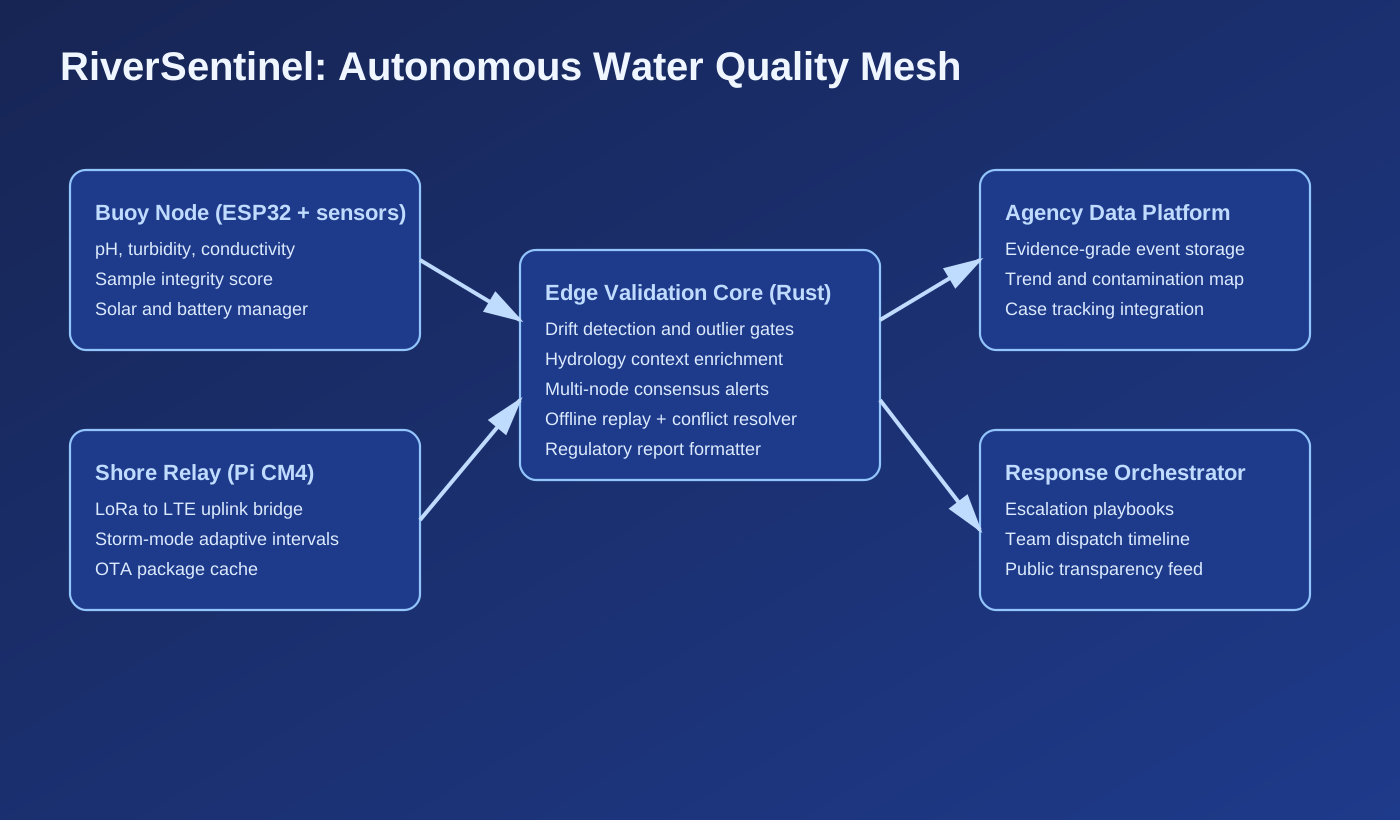
Figure 1: RiverSentinel architecture from buoy sensors to agency action pipeline.
Problem and deployment context
Manual spot checks were too sparse for dynamic contamination events. Teams needed:
- continuous sensing,
- high availability under storms,
- lower false escalations,
- traceable, audit-friendly event records.
The challenge was balancing sensitivity and trust. Over-sensitive systems drown teams in noise. Under-sensitive systems miss incidents.
Mesh node design
Each buoy node measured:
- pH,
- turbidity,
- conductivity,
- temperature,
- power and enclosure health.
The shore relay node handled LoRa-to-LTE uplink and buffered OTA updates for low-connectivity windows.
Environmental hardening
Hardware hardening included:
- anti-corrosion connector strategy,
- enclosure venting + drip path design,
- maintenance-friendly probe mounts,
- aggressive watchdog and self-heal logic.
These choices mattered more than raw sensor specs for real uptime.
Rust validation core
The edge validation engine on Pi CM4 enforced a multi-stage quality gate:
- per-sensor sanity checks,
- drift and slope anomalies,
- context enrichment (rain/storm markers),
- cross-node consensus before escalation.
Consensus logic reduced false events caused by local disturbances and probe artifacts.
Escalation model
Event severity levels were aligned with response procedures:
- Level 1: monitor,
- Level 2: verify with nearest team,
- Level 3: immediate response workflow,
- Level 4: regulatory escalation and public feed update.
The system produced structured incident packets with confidence, supporting evidence, and recommended action steps.
Data governance and traceability
For agency adoption, traceability was mandatory. Every event carried:
- source node signatures,
- validation rule versions,
- enrichment inputs,
- processing timestamps.
This made post-incident review and legal defensibility much stronger.
Pilot outcomes
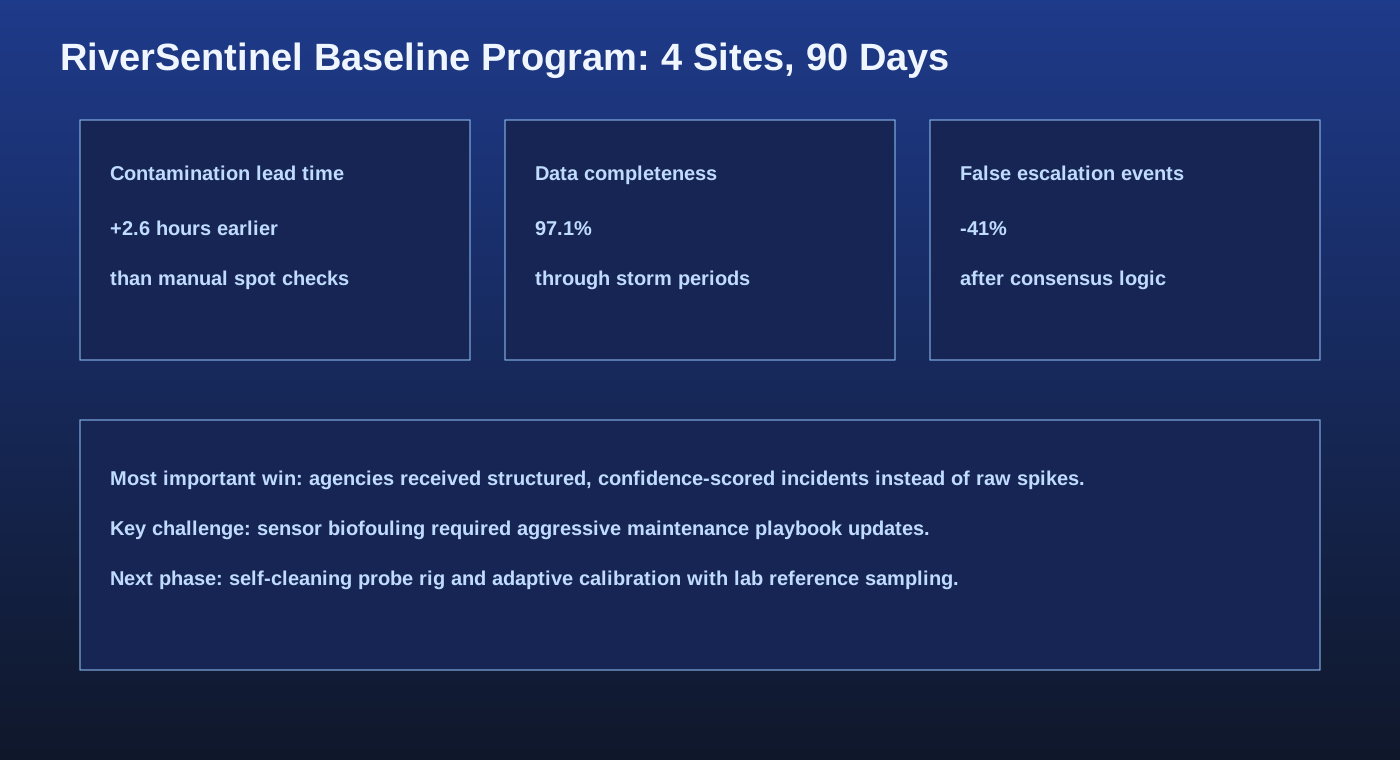
Figure 2: Program-level outcomes over 90 days across four monitored sites.
Measured benefits:
- contamination lead time improved by about 2.6 hours,
- data completeness stayed around 97.1 percent through storms,
- false escalations reduced 41 percent after consensus tuning.
Field teams reported that response quality improved because incidents came pre-ranked with confidence and context.
Key failure points
Issues encountered:
- biofouling accelerated at one site,
- one LTE relay had intermittent backhaul instability,
- early calibration schedule was too conservative.
Fixes:
- updated cleaning cadence and probe shield geometry,
- relay reconnect strategy with smarter backoff,
- adaptive calibration triggers based on residual drift.
Why this is special
RiverSentinel stands out because it merges environmental sensing, robust edge validation, and operations-grade escalation design. It is not “just an IoT graph”; it is an incident response system with evidence quality built in.
Next phase
Future work:
- self-cleaning probe hardware,
- multi-site adaptive thresholds by seasonal patterns,
- stronger contamination source attribution model,
- public transparency dashboard with uncertainty communication.
If you build environmental networks, prioritize trust architecture as much as sensor architecture. The decision pipeline is where most real-world value is created.