Learning
This page tracks what I am actively learning, how I learn it, and where I want to push my technical depth next. I treat learning like engineering: explicit goals, measurable progress, and frequent iteration.
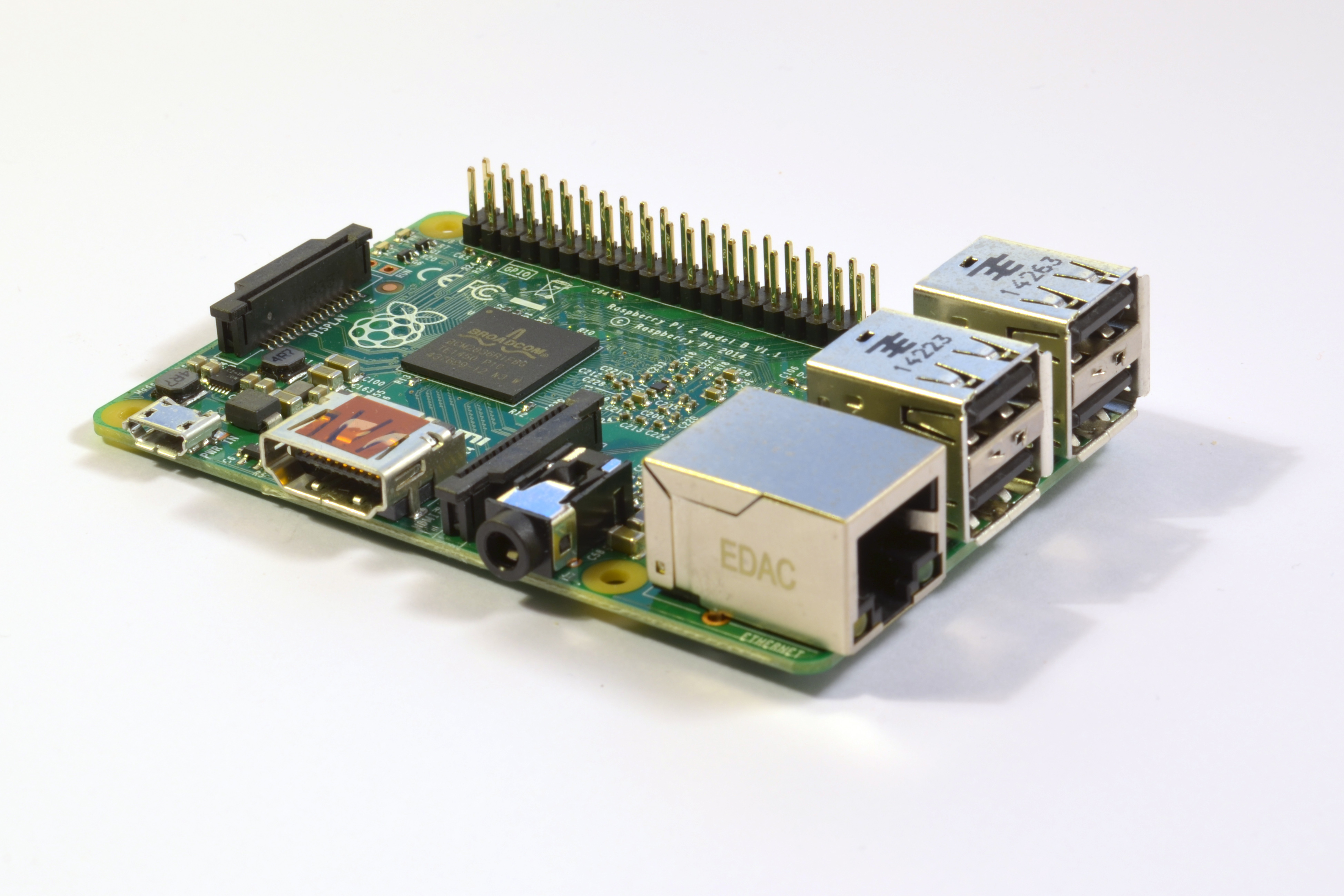
Photo: “Raspberry Pi 2 Model B v1.1 front angle” by Multicherry , licensed CC BY-SA 4.0 , via Wikimedia Commons .
Current deep-focus areas
1. Reliable edge telemetry under real-world constraints
I am deepening my understanding of how to keep telemetry pipelines trustworthy when links are unstable, power is limited, and sensors drift.
What I am practicing:
- bounded buffering and replay design,
- schema evolution without breaking consumers,
- device-side data quality metadata,
- validation gates across ingest boundaries.
2. Linux operations for small edge fleets
I am improving my operational discipline for Raspberry Pi and similar devices deployed in unattended environments.
Key learning topics:
systemdservice and timer design patterns,- update and rollback procedures,
- secure remote access and network segmentation,
- backup and disaster recovery drills.
3. Rust for long-lived systems
I continue to invest in Rust for systems that must stay maintainable for years.
Current focus:
- error taxonomy and context-rich propagation,
- async architecture with backpressure control,
- trait-driven boundaries for testability,
- cross-compilation and release pipeline hardening.
4. Control systems and signal quality
I am actively studying practical calibration, filtering, and control loop stability in embedded systems.
Topics in progress:
- sensor calibration workflows and drift monitoring,
- filter latency tradeoffs in control paths,
- PID behavior under noisy measurements,
- fault-tolerant actuator logic.
2026 learning roadmap
Q1: Reliability foundations
- strengthen edge fault models,
- tighten observability baselines,
- standardize runbooks for recovery scenarios.
Q2: Model-informed automation
- expand digital-twin style control support,
- improve uncertainty communication in recommendations,
- benchmark policy behavior against real event data.
Q3: Fleet-level scale concerns
- safer OTA rollout patterns,
- multi-device configuration governance,
- better cost/latency profiling across architectures.
Q4: Tooling and knowledge transfer
- package recurring workflows into reusable templates,
- publish longer technical postmortems,
- improve onboarding docs for collaborators.
My learning workflow
I rely on a repeatable loop:
- Pick one constrained real problem.
- Build a minimal but testable implementation.
- Stress it with failure scenarios.
- Instrument and observe behavior.
- Refactor with clearer interfaces.
- Document what changed and why.
This keeps learning grounded in systems that actually run, fail, and recover.
What “progress” means here
I do not consider a topic learned when I can explain it in theory. I consider it learned when I can:
- design a reliable baseline,
- detect and classify failures quickly,
- recover safely without guesswork,
- and explain tradeoffs clearly to others.
That standard makes learning slower, but much more durable.
Near-term experiments I want to run
- adaptive sampling strategies for battery-backed nodes,
- confidence-aware alerting for mixed-sensor environments,
- Rust ingest pipelines with formalized load-shedding policies,
- edge-node security hardening templates for rapid deployments.
This page will evolve as those experiments move from notes to repeatable patterns.